
Introduction
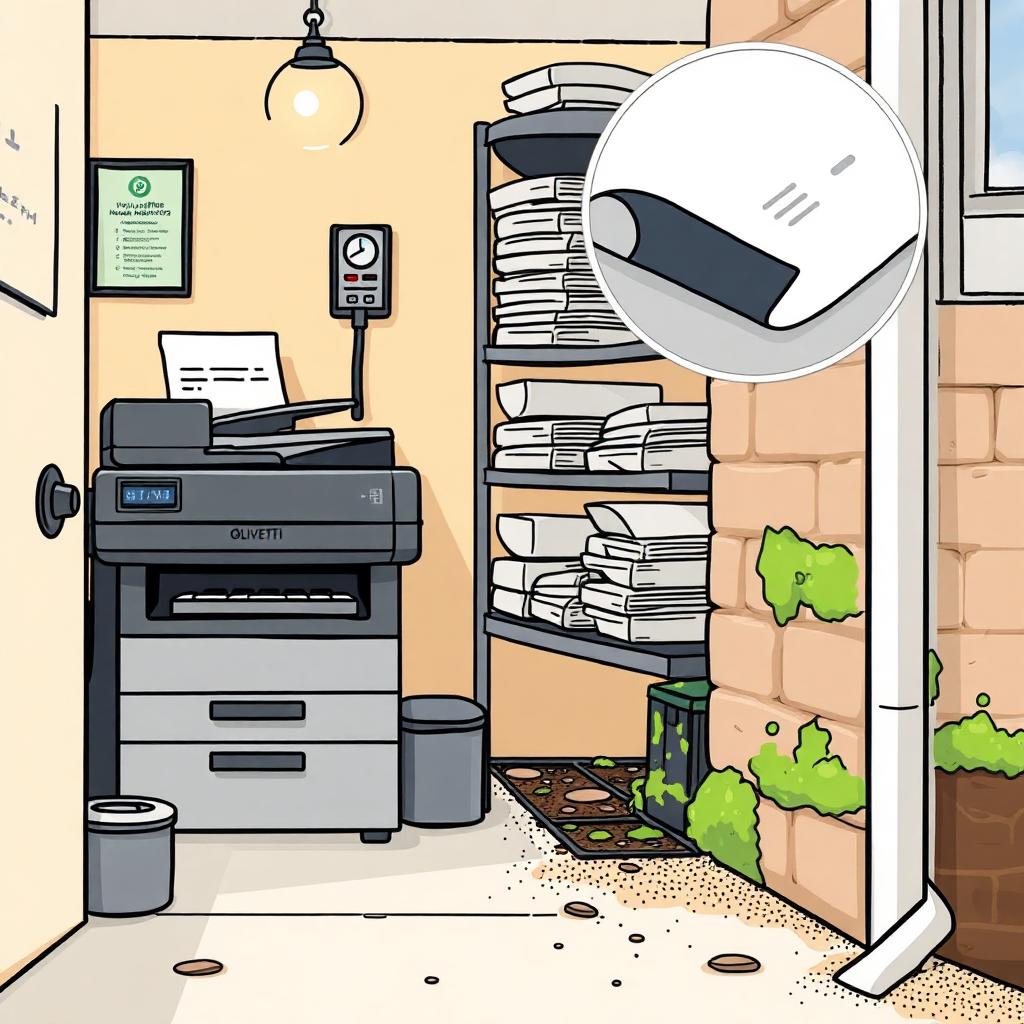
One unexpected phone call from a local charity turned into a reminder of why systems thinking matters. The charity’s main Olivetti d‑MF304 printer—used for newsletters, booklets and posters in their church hall—was constantly jamming. Engineers had been called repeatedly under a supply-and-maintenance contract, parts had been replaced, and the supplier even advised switching to far more expensive paper. Volunteers were frustrated and reluctant to help with printing. Cambria Tech were asked to take a look.
Initial assessment – restrictions and first impressions
Because the printer was covered by a maintenance contract, we avoided any intrusive internal investigations and only opened panels that didn’t require screwdrivers. The printer sat in a small, unheated room where the machine’s own warmth kept conditions roughly acceptable. Nearby paper was stored on racking in an adjacent storeroom. Both rooms were clean, with laminate floors and plasterboard partitions; one wall in each room was a thick stone exterior wall.
A quick test print confirmed the problem: after a few pages the printer jammed. We examined the papers that had been through the printer under a magnifier and noticed a very faint strip of black toner along one edge of the paper. The strip was strongest on the first page and faded on later pages. When we opened accessible panels the printer’s innards showed some loose toner and a little moisture on rollers when wiped — small, but enough to make toner cling to the cloth.
Measuring humidity and inspecting the building
We used a hygrometer from our toolbox and found high humidity in both rooms. That prompted a wider inspection of the building exterior. Around the back and side of the church hall we found failed mortar pointing, vegetation-covered and missing gutters, thick moss on the ground, and trees growing close to the wall. Beneath the moss we found a gravel bed that likely concealed an old French drain. Our conclusion: persistent high humidity in the printer and paper rooms was being fed by external water ingress — likely from blocked/failed drains, compromised gutters and damaged pointing — causing the toner and rollers to behave badly and leading to frequent jams.
Recommendations and prioritisation
The charity was on a tight budget, so we presented a prioritised, practical action plan:
- Immediate: clear and repair gutters (to stop ongoing rainwater ingress).
- Immediate: install dehumidifiers in the print and paper storage rooms.
- Short-term: investigate the gravel bed and repair or replace the French drain where necessary.
- Medium-term: repoint exterior stonework where mortar had failed.
Implementation and outcomes
The trustees followed the two easiest steps right away: clearing/repairing gutters and installing dehumidifiers. The dehumidifiers initially filled quickly — confirming a large internal moisture load. Following a request from the trustees Cambria Tech agreed to project-manage the remaining remedial work, arranging drainage contractors, moss and vegetation clearance, and lining up craftsmen for repointing as needed. We also assisted with fundraising and small-grant applications to help fund the work.
Contractors discovered the gravel trench did run around the building, but only the front contained pipework; other sections were effectively gravel filled trenches. The drainage work was completed before winter. Over the following weeks the dehumidifiers required far less emptying; within months they were no longer needing daily attention, and printing returned to normal. Volunteers resumed helping with print jobs, paper waste dropped significantly and less expensive paper was working in the printer and the charity’s operating costs fell back to normal.
Why this matters – lessons for organisations
- Symptoms aren’t always what they seem: a recurring hardware fault can have environmental or building-related causes.
- Take a systems approach: printers, paper storage, building fabric and drainage can interact to create repeating problems.
- Prioritise low-cost, high-impact fixes first (gutters, dehumidification) while planning for more significant repairs.
- Practical onsite measurements (humidity, visual inspection) can quickly narrow down root causes.
- Project management and access to trusted trades can be critical for small organisations lacking in-house resources.
Conclusion
What started as a printer fault became a property-maintenance project that solved the root cause of the problem and delivered lasting value for a cash-strapped charity. At Cambria Tech we combine IT and operational know-how with practical site-based investigation and project coordination — so we can fix the immediate issue and address the underlying causes. If recurring equipment faults are disrupting your organisation, it might be time to look beyond the device.
If your organisation is struggling with recurring IT hardware issues that might be caused by environmental or property factors, contact Cambria Tech Ltd. We investigate, prioritise pragmatic fixes, and manage any follow-on work to get systems reliably back in service.
